
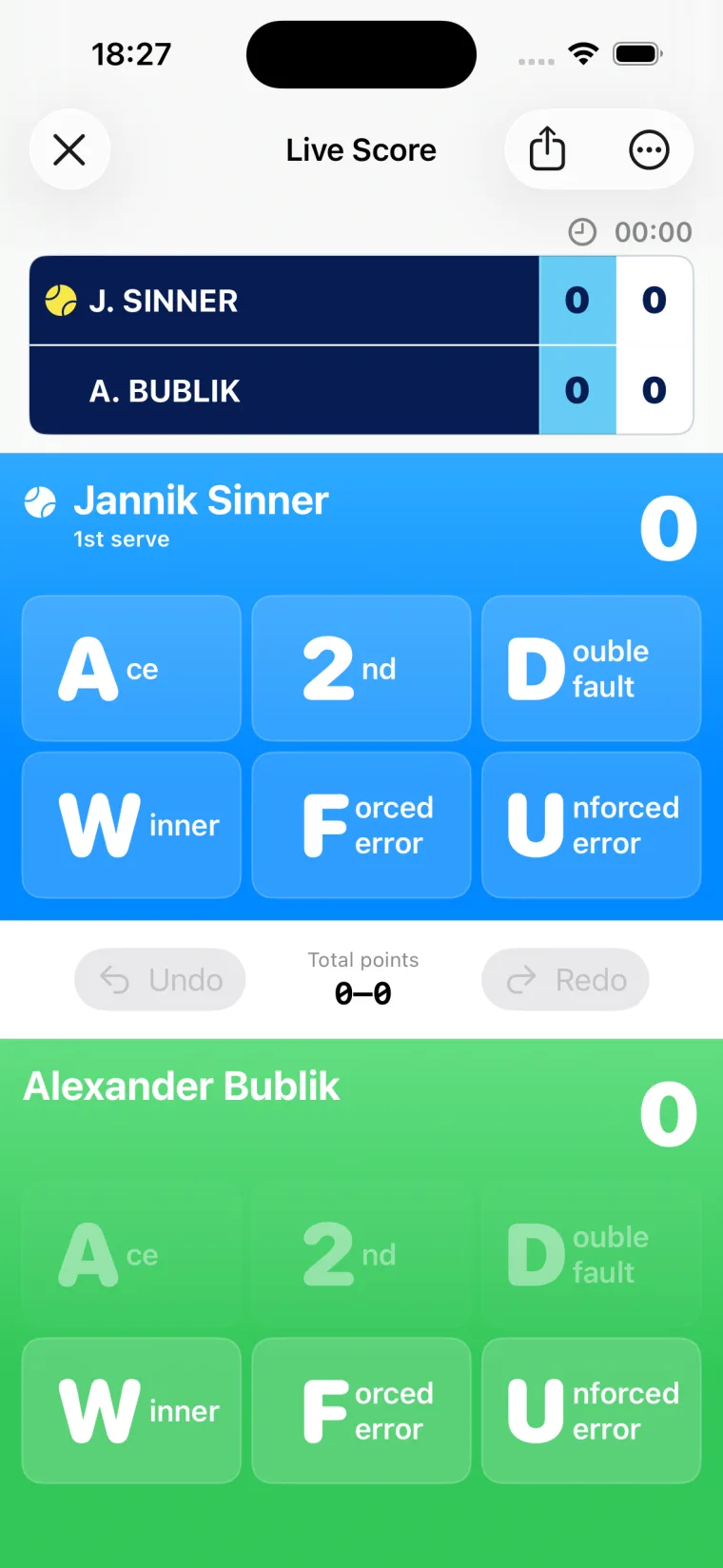
The score tells you who won each point. Advanced Point Tracking adds a second question: how did that point end? Aces, double faults, winners, forced errors and unforced errors create a more expressive record of the match.
Capture the outcome while it is clear.
Immediately after a point, the person scoring can choose the outcome with one tap. Match Update keeps the tennis score moving while adding the detail needed for a richer analysis later.
This mode asks more attention from the scorer, so it is best used when someone can comfortably observe and classify each point without distracting the players.
When this helps
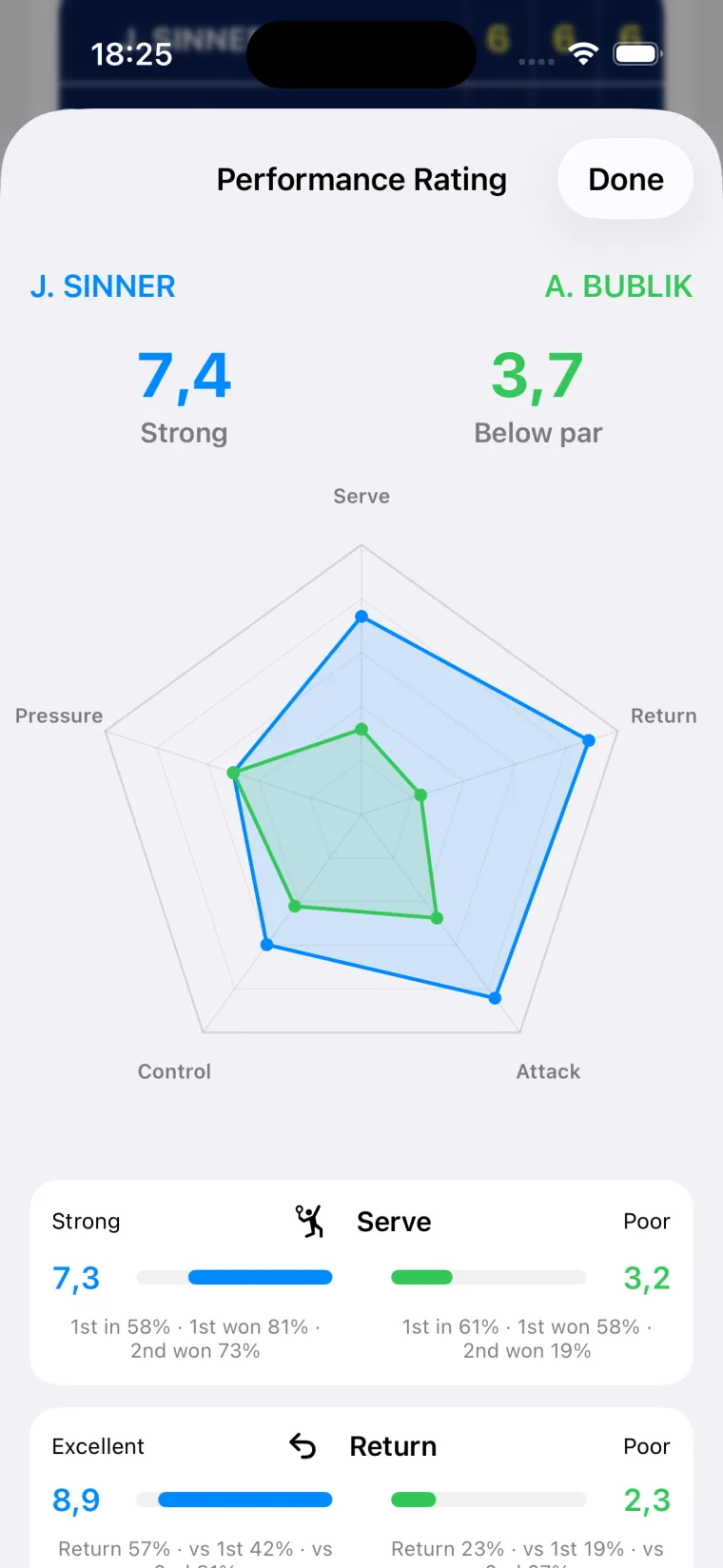
Use Advanced Point Tracking for matches where performance matters as much as the result, especially when a player or coach wants to compare serve, return, attack, control and pressure afterward.
Turn point outcomes into a performance view.
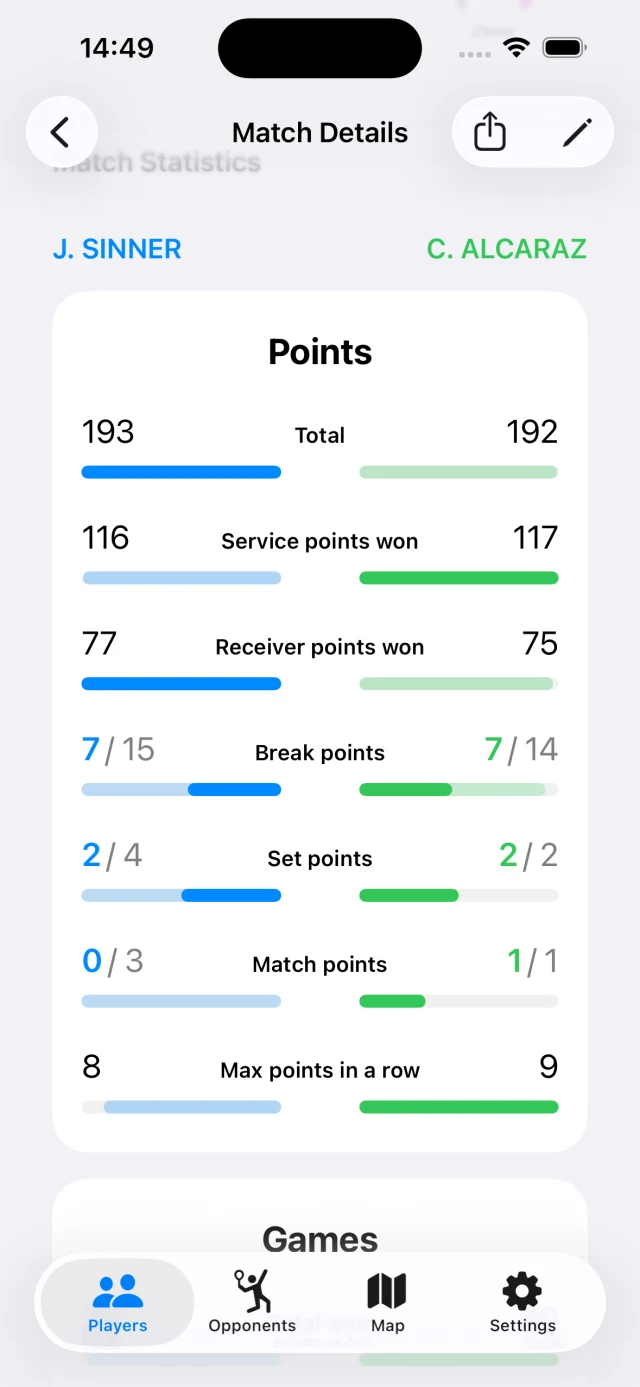
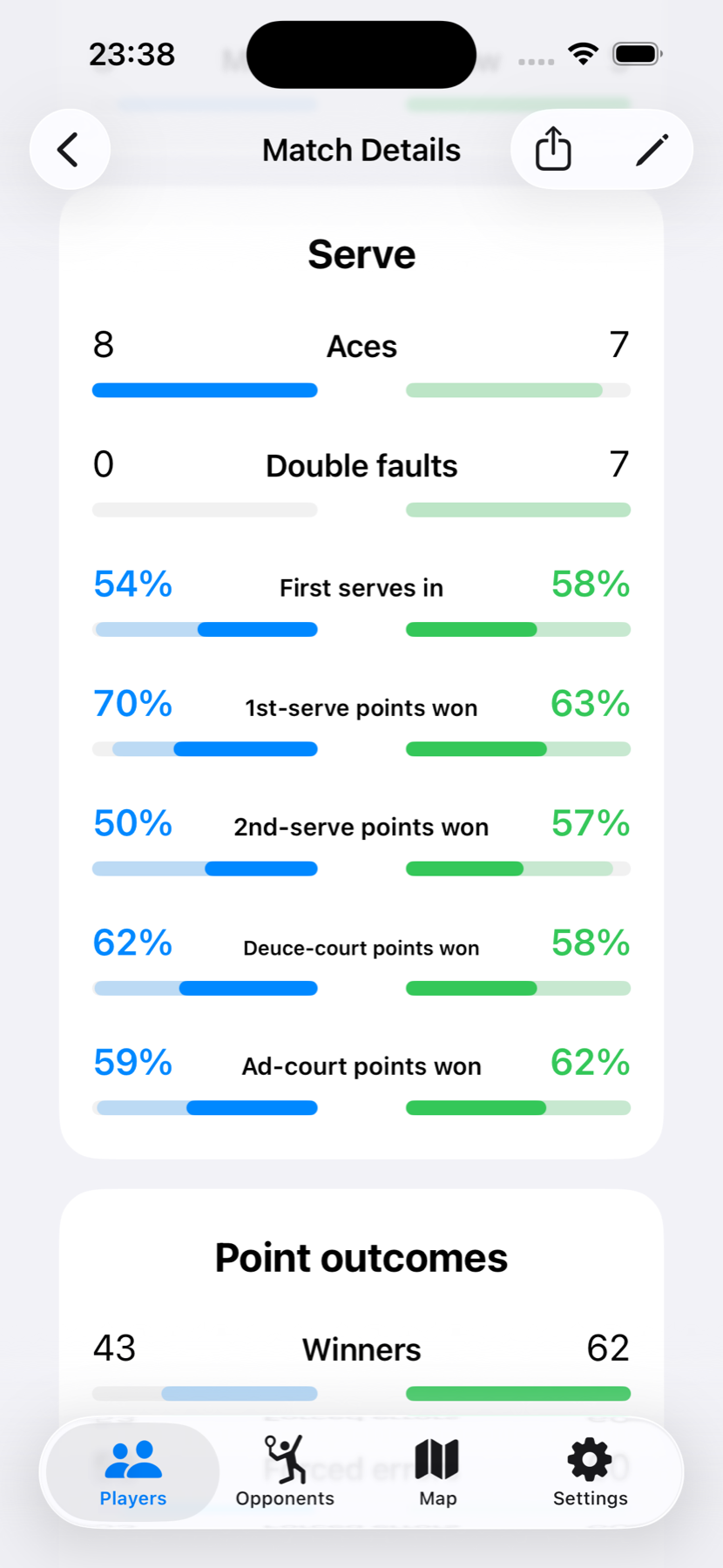
After the match, performance ratings summarize the recorded evidence across several parts of the game. The comparison can highlight a strong return day, a gap under pressure or an attacking pattern that the final score alone would not explain.
A prompt for reflection, not a verdict.
A rating is most useful as the beginning of a conversation. Combine it with the player’s experience, the match conditions and point-by-point replay. The aim is to notice patterns, not replace tennis judgment with a single number.